Beyond the Glamour: Why Nigeria’s F1 Dream Must Start on the Street, Not the Grid
Picture Abuja transformed for a Grand Prix weekend. The nation’s capital is buzzing with an electric, uncharacteristic energy. Central Business District hotels are booked solid six months in advance.
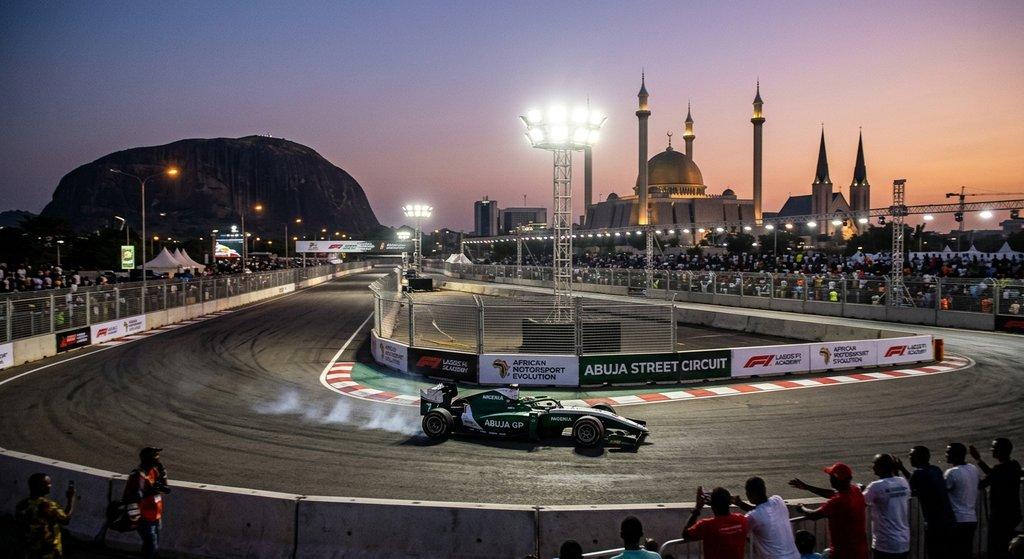
Picture Abuja transformed for a Grand Prix weekend. The nation’s capital is buzzing with an electric, uncharacteristic energy. Central Business District hotels are booked solid six months in advance. Private jets jostle for apron space at Nnamdi Azikiwe International Airport. International television crews have descended on the city, setting up broadcast gantries framed by the imposing monolith of Zuma Rock.
Celebrities stroll hand-in-hand with Nigerian Afrobeat stars through a temporary paddock erected near the Eagles Square. Nollywood assemble meet international high fashion, while political grandstanding over chilled champagne in corporate hospitality suites. Music echoes across the city’s wide avenues. Politicians smile broadly for global cameras while business leaders quietly broker multi-million-dollar deals in VIP lounges. Then the lights go out!
Twenty Formula 1 cars launch from the grid, their turbocharged hybrid engines screaming into the first corner as hundreds of millions of people across the globe tune in to watch Nigeria host the spectacle. For a country that understands grand drama and spectacle as instinctively as Nigeria does, it is a delicious, intoxicating vision. And with recent headlines confirming Nigeria’s official bid and a proposed $500 million master plan to bring Formula 1 to Abuja, that vision has shifted from a mere enthusiast’s pipe dream into an ambitious state effort. Nigeria wants to end Africa’s three-decade Formula 1 drought. It is a thrilling prospect. But once the confetti settles and the press releases are filed away, an uncomfortable question remains: How exactly do we get there?
Because Formula 1 is not simply a high-profile motor race that can be invited to town with a generous cheque and a warm welcome. It is the absolute peak of international motorsport, and getting onto its fiercely contested calendar is a fundamentally different proposition from organizing a successful cultural festival or a high-profile political summit. The glamour is real. So is the politics. So is the money. So is the competition. And perhaps most importantly, so is the unglamorous, painstaking technical work required behind the scenes.
The Unspoken Passion on Abuja’s Streets
Long before official bids were drafted or international promoters were consulted, motorsport in Abuja already existed - it just operated in the shadows.
For decades, over the weekends, when the government convoys have cleared and the capital’s wide, smooth boulevards sit empty, another side of the city resumes. Engines rev in the humid air. Modded saloons, imported sports cars, and tuned hatchbacks gather at designated intersections. A vibrant, underground culture of street racers, car enthusiasts, and thrill-seekers has claimed the tarmac as their own. For just as long, the official response has been entirely punitive, police blockades, task-force raids, Federal Road Safety arrests, impounded vehicles, court dates, and stern public warnings about public safety. Yet, generation after generation, the racing never stopped. Why? Because authorities attempted to extinguish a deep-seated human passion without ever providing a constructive outlet for it. Nigeria possesses a raw, unchanneled appetite for speed, engineering, and competition. You cannot crush that energy by simply outlawing it; you must capture it, build an enclosure around it, and redirect it into a structured, safe, and professional ecosystem.
If Nigeria genuinely wants to build a culture capable of supporting a Grand Prix, its starting line should not be a glitzy launch event in a five-star hotel. It should begin by offering those midnight street racers a legal asphalt track, proper safety gear, professional timing systems, and a legitimate pathway into organized motorsport.
Everybody Wants a Piece of Formula 1
There was a time when Formula 1 was primarily associated with the traditional, grease-stained European motorsport heartlands of Silverstone, Monza, and Spa. Today, the championship has evolved into a global economic monster. Monaco brings its harborside yachts and old-world aristocracy. Singapore transformed a Grand Prix into a glittering, night-time urban spectacle. Miami turned its event into a wild fusion of sport, celebrity lifestyle, and beach-club culture. Then came Las Vegas, where racing cars are merely one component of a massive entertainment, tourism, and corporate machine locking in its place on the calendar through at least 2037.
That is the true lure of hosting Formula 1. It isn't just about watching twenty drivers circle a track for ninety minutes. It is about filling tens of thousands of hotel rooms, fine-dining establishments, and commercial flights. It is about global broadcast exposure, sovereign branding, massive advertising revenues, foreign direct investment, and geopolitics. It is about a city becoming, for one hyper-visible weekend, the center of the sports universe.
Nigeria understands this language better than most. Abuja understands international diplomacy and scale. Lagos understands global entertainment and pop culture. Nigerians universally understand hospitality and how to turn any occasion into an unforgettable event. It is easy to see why the pitch for a Nigerian Grand Prix sounds so persuasive on paper. Imagine the economic multiplier effect. The international media coverage would be unprecedented. The social media content would write itself. But there is a catch: The party is the easy part. The hard part is building the underlying engineering and sporting justification for the party to exist at all.
Africa Has a Problem - and an Opportunity
There is this legitimate argument for why an African Grand Prix deserves serious priority from the sport's governors. Africa remains completely absent from the F1 schedule. The continent has a rich racing history - first it was Morocco in the 1950's and most notably through the South African Grand Prix at Kyalami - but it currently holds zero spots on the 24-race calendar. That is an increasingly awkward anomaly for a championship that aggressively markets itself as a global brand.
Africa is home to over 1.4 billion people. It boasts some of the world's fastest-growing urban centers, an overwhelmingly young population, immense cultural export power, and expanding economies. Yet when Formula 1 packs up its traveling circus to move across continents, Africa remains a spectator watching through a screen. There is a valid, pressing conversation to be had about building a modern, FIA Grade 1 facility in West Africa. But it cannot be framed as an entitlement. Formula 1 does not operate on sentiment or demographic equity.
A circuit must meet rigorous safety protocols. The surrounding infrastructure must support heavy cargo logistics, reliable power grids, top-tier medical facilities, and seamless transportation. The promoter must be financially solvent, and the FIA’s technical demands are non-negotiable.
That is why Nigeria’s ambition must be broader than simply declaring, "We want to host Formula 1." The real ambition must be: "We are going to construct a world-class motorsport industry in Nigeria." Formula 1 will naturally follow.
Imagine Trying This With FIFA
To understand how the international sporting community views unproven bids, a little national satire is useful. Imagine Nigerian delegates approaching FIFA headquarters in Zürich and declaring:
"Ladies and gentlemen, we would like to host the senior Men's World Cup next year."
FIFA officials would reasonably pause and ask a few fundamental questions:
- Where are the modern, operational stadiums?
- Where is the grassroots youth academy infrastructure?
- Where is the domestic league system that trains local referees, coaches, sports medicine professionals, and managers?
- Where is the surrounding ecosystem required to support world-class football daily?
Imagine Nigeria cheerfully responding: "Don't worry about all that. We have 200 million passionate fans and incredible enthusiasm!"
The resulting silence in the room would be deafening. The absurdity illustrates the point: FIFA will not hand its crown-jewel tournament to a nation simply because the country loves football and promises a great party.
Why should the FIA behave any differently with Formula 1? We cannot simply say, "Abuja has majestic architecture, Nigeria has luxury hotels, and our hospitality is unmatched, so please hand us a race date." That is not how elite motorsport operates. The F1 calendar is one of the most ruthlessly competitive real-estate markets in global sports. National governments, sovereign wealth funds, and global conglomerates compete fiercely for those dates because of the immense value attached to them. The glamour is the final polish but the grueling technical foundation comes first.
The Cautionary Tale of Hanoi
Vietnam offers an important lesson in the risks of chasing a turnkey Grand Prix. In 2018, Vietnam was proudly announced as the newest host on the Formula 1 calendar after several years of preparations, with Hanoi's plan to host its inaugural race in 2020. A hybrid street-and-permanent circuit was constructed, infrastructure was installed, and ticket sales opened to global fanfare.
Then the COVID-19 pandemic struck, followed by local political shifts and corporate disruptions. The inaugural race was postponed, then canceled, and the Vietnamese Grand Prix was abandoned entirely without ever hosting a single official race. Today, parts of that multi-million-dollar circuit stand idle. Total Waste of funds, total waste of the opportunity.
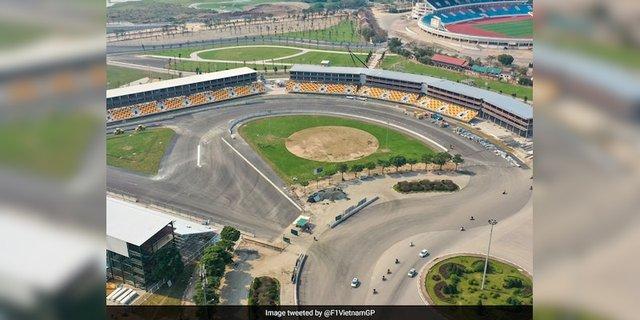
It is a stark reminder that even reaching the stage of an official contract does not guarantee long-term success. Formula 1 operates on an uncompromising schedule. The circuit, the supply chains, the local workforce, and the political consensus must all be completely aligned. When one pillar collapses, the whole enterprise stalls.
So How Long Must We Wait?
This is where national impatience could prove to be the biggest obstacle. We are accustomed to grand project announcements: "World-class facility coming soon." "Multibillion-naira project launching next quarter." Formula 1 an the hard-nosed business muggles that run it are entirely unimpressed by promotional promises. There is no shortcut between a initial expression of interest and an engine firing on a starting grid.
Consider Argentina. The country hosted Grand Prix racing for decades and produced legend Juan Manuel Fangio. Yet, after losing its spot in 1998, Argentina has spent years working to upgrade the Oscar y Juan Gálvez circuit, secure private investment, and meet modern safety standards just to re-enter the conversation. Even a nation with deep F1 heritage must earn its way back step by step.
Nigeria should not be discouraged if a genuine, sustainable Grand Prix initiative requires a ten- to fifteen-year strategic plan. In fact, we should demand it. Fifteen years of deliberate, ground-up motorsport development would do far more for the Nigerian economy than fifteen years of re-issuing press releases about a race that never happens.
The Real First Nigerian Grand Prix
It sounds counterintuitive, but the most practical path to hosting Formula 1 is to stop focusing exclusively on Formula 1. If Nigeria wants a Grand Prix, the immediate priority must be creating the grassroots conditions that make hosting an international race the natural, logical outcome of an existing culture. That process begins with kids in go-karts. Not just wealthy children whose families can afford trips to European tracks, but boys and girls from diverse backgrounds across the country who can discover racing as an accessible sport.
When you put a child in a kart, you aren't just looking for the next Lewis Hamilton or Max Verstappen. You are training:
- The nation's future race engineers and telemetry analysts.
- Its future high-performance mechanics and chassis tuners.
- Its future FIA-certified marshals and safety officials.
- Its future sports journalists and broadcasters.
- Its future motorsport entrepreneurs and team owners.
That is how a sports culture takes root. Nigeria needs a critical mass of people who care about racing beyond the lifestyle content and celebrity sightings. We need enthusiasts who debate tire degradation compound choices, aerodynamic downforce levels, and cornering telemetry over lunch. When a critical mass of citizens understands the technical realities of the sport, the country becomes an attractive, self-sustaining market for international racing bodies.
Building the Pyramid Before Chasing the Calendar
Government cannot, and should not this alone. The public sector’s role is to provide clear regulation, tax incentives for sports infrastructure, and land allocation. Private investors must build viable businesses. Schools must include promote Science, Technology Engineering and Mathematics (STEM) curriculum, while Technical universities must introduce automotive engineering programs focused on high-performance dynamics.
Though still at its infancy, Nigeria already has the raw elements: active motor sports clubs, drift organizers, tuning shops, karting operators, biker communities and dedicated racing enthusiasts who have keep the scene alive out of pocket for years. They must not be sidelined in favor of top-down bureaucratic initiatives. We do not need another grand project where an impressive 3D render of a track is unveiled at a gala dinner, only for the site to remain an untouched plot of land three years later. What Nigeria needs is the hard, continuous work of local racing every weekend.
A Circuit Must Work 365 Days a Year
This is where proposals like El' Uno Etreme Circuit - the Sub-Saharan Racing Circuit project in Abuja become strategically important. They have provided their business model and built it correctly.
The justification for a major circuit complex must never be: "Build this track so F1 will come." That is putting the cart miles ahead of the horse. The pitch must be: "Build a flexible, world-class motorsport hub that powers Nigerian and African automotive development for thirty years—and design it to FIA Grade 1 standards so it can seamlessly host F1 when the time is right."
A financially viable racing facility cannot sit empty waiting for a single annual mega-event. It must maintain an intense year-round series calendar:
- Grassroots Karting Championships: Operating every weekend to identify young talent.
- Driver Training Academies: Teaching advanced vehicle control, defensive driving, and performance techniques.
- Legal Track Days & Drift Competitions: Giving street racers a safe, structured venue to compete legally.
- National & Regional Series: Touring cars, bike racing, and cross-border West African championships.
- Automotive R&D & Testing: Partnering with regional vehicle assemblers for hot-weather component testing.
- Corporate & Commercial Events: Product launches, track days, and hospitality activations.
That is how a racetrack becomes an economic asset and an enduring institution, rather than a white elephant.
The Destination, Not the Starting Point
There is nothing wrong with ambitious dreams. Nigeria needs bold, transformative ideas—provided they are anchored by sound engineering, clear economics, and disciplined execution. An African Grand Prix in Abuja would be magnificent. It would showcase the country to a global audience of hundreds of millions, spur foreign direct investment, boost aviation, tourism, and hospitality, and establish West Africa as a serious destination for high-tech sports engineering.
But none of those benefits will materialize simply because we want them badly enough. They will happen when we build something so robust, functional, and compelling that the rest of the world cannot afford to ignore it. Let the government establish the policy framework. Let private capital build the facilities. Let technical institutions train the engineers. Let the street racing community bring its energy off the public avenues and onto proper circuits. Let children discover karting. Then, a decade or so from now, when the representative from Nigeria sits down across the table from Formula 1, the pitch won't be a plea: "Please give us a race." It will be a simple statement of fact: "Nigeria is ready."
And when those gantry lights finally go out over a circuit in Abuja, with the engines roaring into Turn 1 and the global audience watching, someone in the pit lane will inevitably ask: "How did Nigeria build all of this?" The answer will be straightforward: We didn't chase the circus. We built the sport from the streets up—and the circus came to us.

Eme Eleonu
A forward-thinking banking executive and passionate STEM advocate, Eme bridges high-level financial strategy with a commitment to empowering the next generation of innovators. As the key promoter of El' Uno Nigeria - Sub-Saharan Africa's premier motor racing circuit, he drives infrastructure development and sports tourism while championing high-performance engineering in the region. Off-duty, he is an avid outdoor enthusiast who brings his trademark esentric energy and drive from the boardroom into nature and physical exploration.
No comments yet. Login to start a new discussion Start a new discussion